
Harvest and Hospitality
Unreasonable Hospitality and the Case for In-Person Wine EventsIt starts in the vineyard
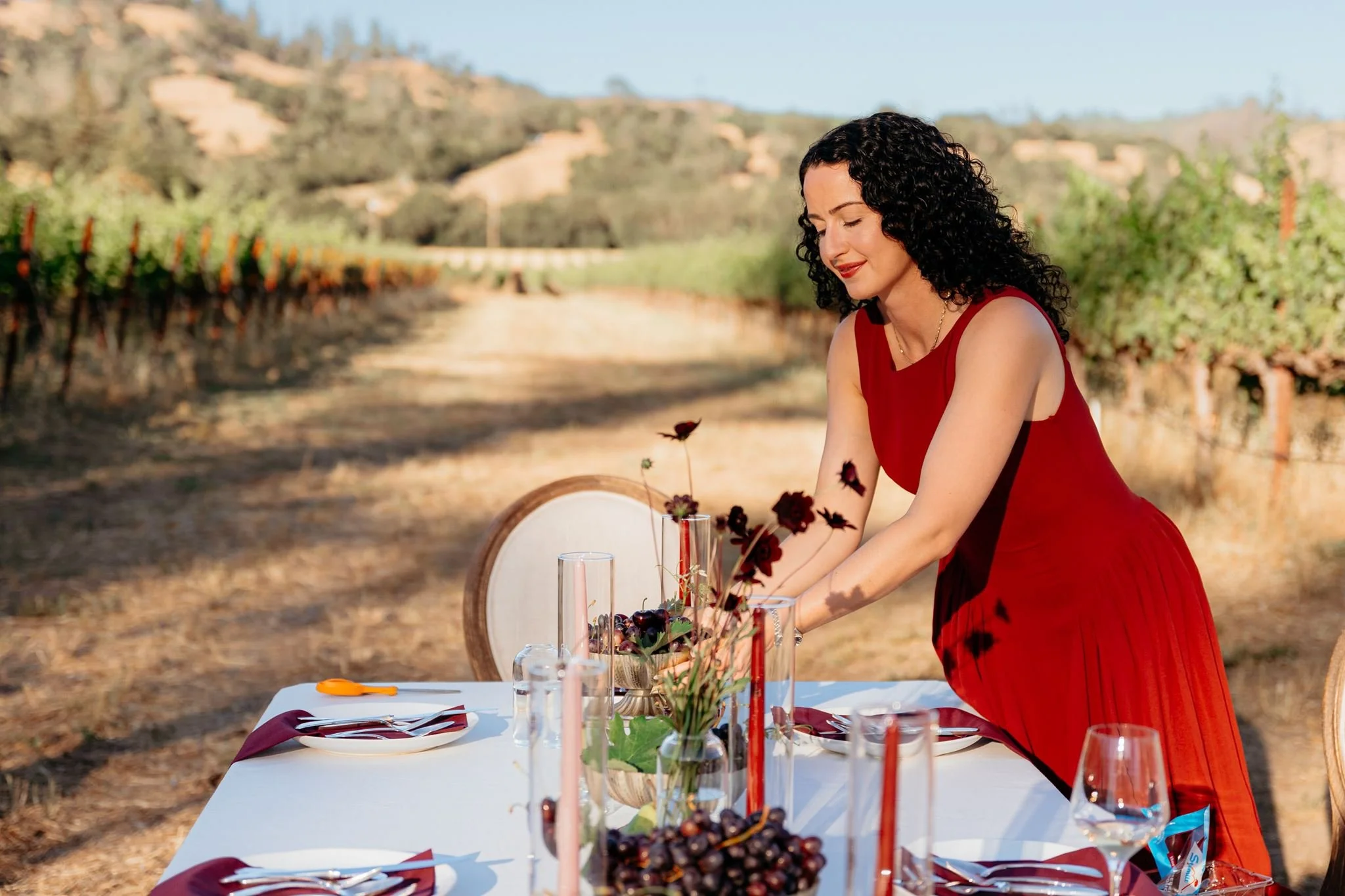
Right now, all over Sonoma, the last of the fruit is coming in. It feels like a rush but it's the last part of a twelve month push.
Because before any harvesting a team was out there pruning and shoot thinning and pulling leaves by hand to get air moving through the canopy. Vineyard Managers walked the rows looking for mildew and disease, made calls about water and cover crop and soil that won't show up in a glass for another two years. If they show up at all.
I worked a harvest for Giant Steps back in 2018, and the thing I still think about with that experience is how many times the same fruit gets touched. Picked by hand. Sorted in the vineyard. Sorted again on the crush pad. Then into the vats. That's four rounds of physical and paid work before fermentation has even started, and every single one of them is a person choosing to throw away fruit that somebody already paid a year to grow.
Then fermenter to press to barrel to bottle. And that's only the liquid. After all of that, somebody still has to design the label, source the glass, build the tasting room, get on a plane and go sell it.
If you ran that business plan cold, it would not survive the first meeting. Quite frankly, to make great wine you have to be a little unreasonable.
Which is the word that kept dragging me back to Will Guidara's book.
It gets handed to a consumer
Here's why I use the time I spent in hospitality to educate strategy around consumer experiences. All of that unreasonableness goes into a bottle. Then the bottle gets set down in front of a consumer who wasn't in the vineyard, never met the crew or the founder, and has about four seconds of attention to give it. Years of work either land in that moment or it doesn't.
That's the bridge that hospitality provides. Harvest is unreasonable effort pointed at the wine, and hospitality is that same effort pointed at a person. One of them makes the wine worth making, the other one makes it worth remembering. In-person events provide the multiplier for a smaller brand to be ‘worth remembering,’ when done well.
What I took from Guidara was not that you should spend more. It was that you should spend it in the places somebody will actually feel it. He calls it “the remarkable power of giving people more than they expect” and the word doing all the work in that sentence is expect. Expectation is personal and you can't exceed it if you don't know what it is.
The best meal of my life
I ate at SingleThread last week. For the fourth time, and it was the best meal of my life.
Which should be a hard thing to pull off on a fourth visit. I know the inner workings of that restaurant. I know how the trick is done, and usually knowing how the trick is done ruins the trick.
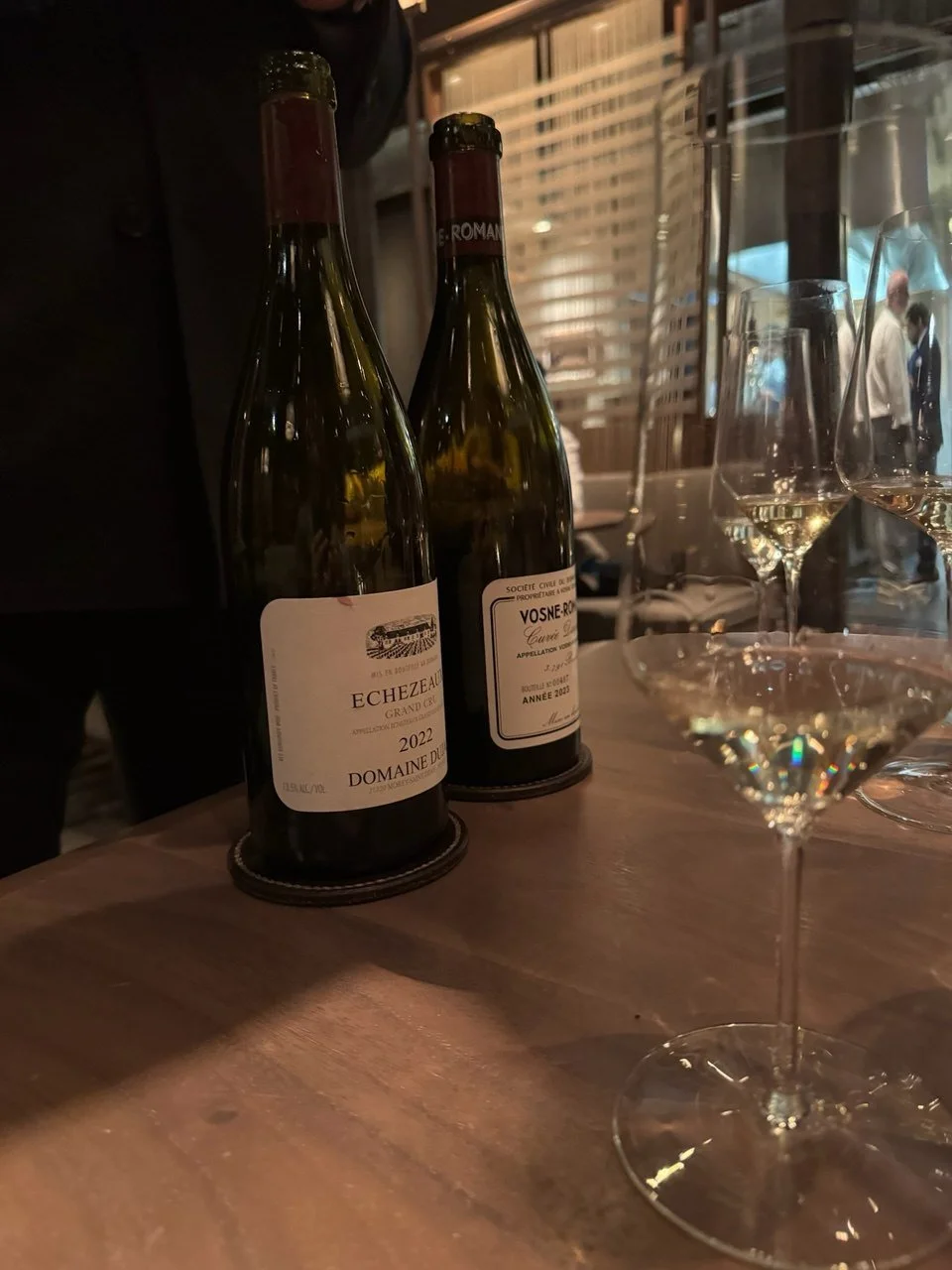
With the main course, they brought out a bottle of Domaine Dujac Echezeaux. But they didn't just pour it. They served it side by side with Domaine de la Romanée-Conti's Vosne-Romanée 1er Cru Cuvée Duvault-Blochet.
Nobody explained it. All anyone said was that they were taking care of the red for the main course. Big smiles, glasses down, gone.
If you know me, you know my cat is named Echezeaux. I don't drink Grand Cru Burgundy very often, which means most of the Echezeaux in my life shows up as kitty cuddles on a Tuesday.
Was it the food? The wine? The room? The service? All of it. But what actually got me was being seen.
And I keep coming back to the fact that they never said a word about it. A team that needs you to notice how clever the gesture was is performing. A team that lets you find it yourself is connecting on a much deeper level.
Unreasonable is not the same as expensive
Here's the part I want operators to sit with since pulling out Grand Cru Burgundy is not exactly possible in a tasting room on a daily basis.
That gesture only worked because the team knew details about me, personally. They knew about my cat. They knew I'd understand what a side-by-side of that caliber was actually saying, and that I'd want to talk about it for twenty minutes. If either of those had been wrong, they would have spent a shitload of money on a gesture that didn't land.
Extravagant is spending a lot. Unreasonable is spending in exactly the right place, on exactly the right person, which means doing the deeply personal work of knowing them first.
But here's the thing about the knowing, and this is where it gets more accessible.
A producer I admire had a walk-in come through the tasting room one afternoon. Nobody knew anything about her. No reservation notes, no club history, no cat named after a Grand Cru. What happened is that the person pouring listened and connected with their guest, wrote a few things down after she left, and about a week later sent her a handwritten letter that mentioned one specific detail from the visit.
A stamp and ten minutes && she's been a club member ever since.
So the knowing isn't a database. It's attention, plus the discipline to write it down, and actually using it later. SingleThread has a decade of that and a trained team to match. The tasting room has a CRM and stationary. Same mechanism, and the letter is not the lesser version of it.
That's the part most brands skip. They budget for the grand gesture and never build the habit that tells them where to point it.
What Scribe figured out early
Scribe was the number one seller during my time at Little Saint, and we couldn't even get it year-round. When we had it, it moved. Which means people were walking in already wanting it.
Two brothers founded it in 2007. Farmers. And from early on they put real money into telling their own story, in video, in photography, in press, and in person out at the Hacienda.
I've been to the Hacienda. What they've mastered is effortless coolness, which is maybe the hardest thing in hospitality to fake. The staff are all distinct, all confident in their own way, and every one of them reads like they genuinely belong to the brand instead of like somebody handed them a script. Finding and keeping a team that embodies your values without performing them isn't a line item. It's a hiring philosophy, and it is slower and more expensive than the alternative.
Matthew Plympton, who founded Revel Wine, watches this space as closely as anyone I know. When we talked through why Scribe works, he landed in the same place I did without me leading him there. It is the hospitality and the consistent brand messaging that people can see within themselves and connect to that makes them keep going back.
None of that made obvious economic sense in 2007.
Okay. I realize I'm about to go IN on finance terms in a newsletter that is supposed to be about a feeling. Stay with me.
If you've looked at CAC for your brand, you already know that a single bottle sale doesn't support the economics. It just doesn't. A one-time purchase is a loss wearing the costume of a win. The only version of that math that works is the one where the first bottle isn't the last.
So the money you "overspend" on hospitality isn't the cost of the sale in front of you. It's the cost of the second one, and the fifth, and the fiftieth.
The multiplier
I was talking to Sabrina, our ops manager, about a potential client, and she said something that stuck with me. One happy client turns into 10x referrals.
That's the whole thing. In a market this saturated, where a buyer is staring at forty bottles that all look pretty good, the tiebreaker is almost never the wine by itself. It's whether anybody made them feel like the wine was theirs.
So be unreasonable in the vineyard. Then be unreasonable with the person holding the glass.
Do both and you don't just get a one time customer, you get a loyal ambassador, one that brings the bottle to share with their friends, one that takes that unreasonable moment and turns it into a multiplier
On getting you your next unreasonable in-person event
I hear from small producers that they want to be in-person events where this kind of hospitality is possible, and they can be cost-prohibitive. The cost of a table at a wine and food event, plus travel and staffing, prices out exactly the small brands that would get the most out of being in the room.
That's why we built the shared table model at Own Rooted Hospitality. Producers split the cost and share the table, and each one gets a Michelin-trained sommelier telling their story at it. We used to offer this exclusively to our ORH Partners (though they still get first right of refusal); now we are opening this up to the greater community.
If that sounds like you, hit reply or fill out the inquiry form here. Two shared in-person event opportunities are coming up next month, and we're booking private and curated in-person events through the holidays.