
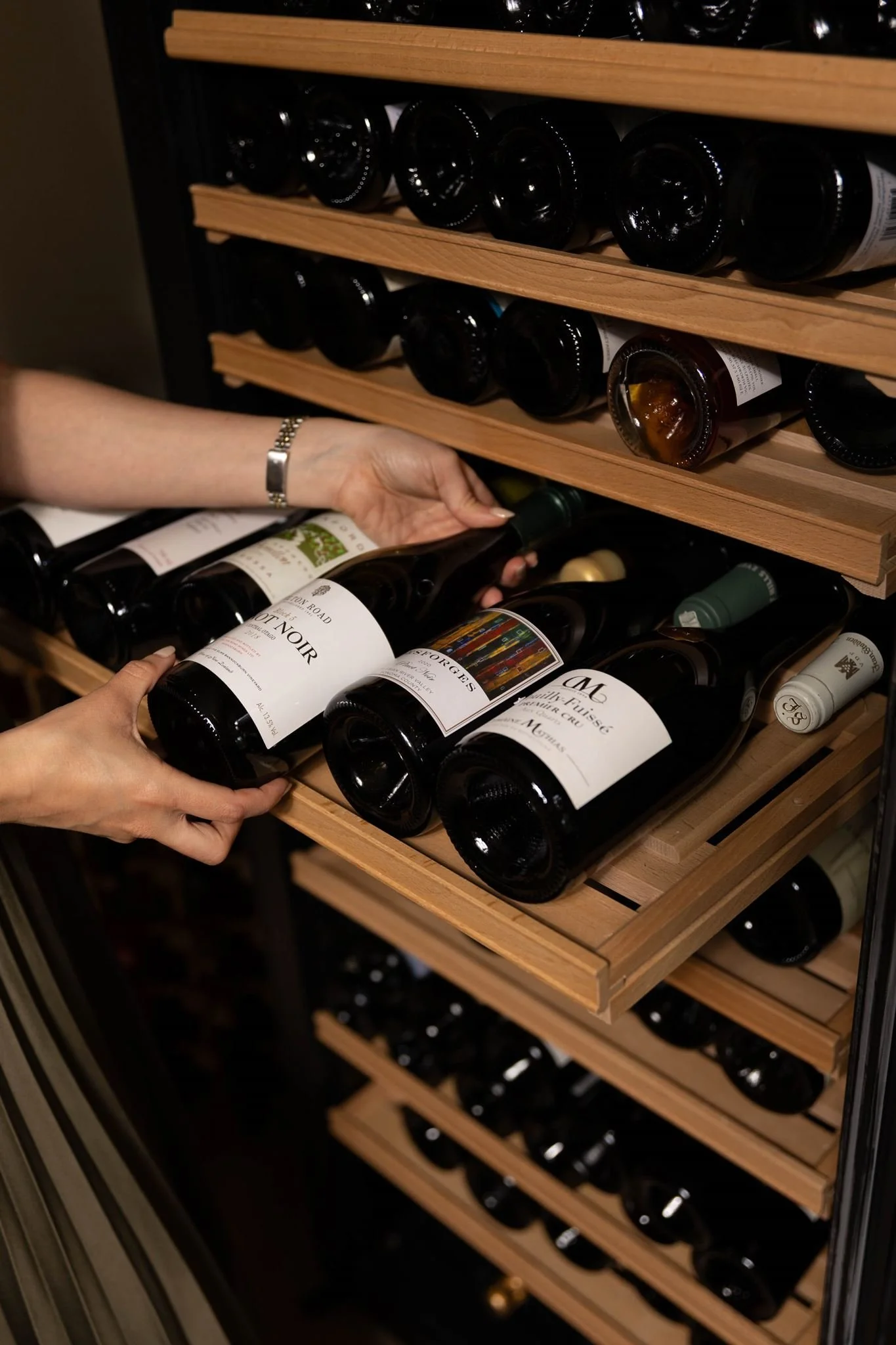
"We cannot cost-cut our way back to growth."
Jeff O'Neill (CEO of O'Neill Vintners & Distillers) said that at the Wine Industry Financial Symposium in Napa this November, and it's something we talk about all the time when it comes to building a healthy wine business with our partners at ORH.
The short answer: community is the biggest driver of DTC wine sales right now. The producers who are growing are the ones giving people a reason to gather, taste, and want to support them.
It's called a wine BUSINESS for a reason. If wine is being sold for less than it costs to make, that's not a sustainable business model. And right now that's tricky, because there's so much excess wine in the market that MANY producers are selling below what it cost to make.
Which brings up the cash flow vs. net profit conversation. If cash flow and moving aging inventory is the priority, we can help solve for that with discreet outlets. But that's a quick fix, not a long-term solution.
So what IS sustainable? Building a community around what you're doing, and a brand identity people can see themselves in, with values they relate to.
Wine is a deeply personal experience not only for the person drinking it (and their palate) but also for the small producers putting their heart and soul into each bottle.
The problem? Drinkers are missing the translation layer that shares the values, land, and humans behind each wine. And on a crowded shelf, the stories of small producers can easily get lost.
The solution for that translation layer? Community. Giving people a reason to gather, taste, and come back, IRL and in the digital space.
Fewer occasions, not fewer drinkers
The number that stuck with me most from the symposium came from NIQ. 72 percent of wine's recent decline comes from fewer purchase occasions. Only 28 percent comes from fewer buyers.
So, people are still drinking wine. They're just doing it less often, and way more intentionally. Kaleigh Theriault from NIQ basically said it out loud: recruit people through experiences that actually mean something to them, and give your existing buyers a reason to come back.
And yes, the backdrop is real. Demand is down about 18 percent over five years (that's O'Neill's number). Here at home in Sonoma County, 5.9 percent of vineyard acreage came out in the last year alone.
In a market like this, the producers holding their ground from a market share perspective are the ones whose customers are genuinely loyal, the ones who still choose them on the nights they do open a bottle.
So why choose one wine over another? Feeling. Which makes us go back to why our name has hospitality in it. There's that line often attributed to Maya Angelou: "People will forget what you said, people will forget what you did, but they will never forget how you made them feel."
A great memory at a winery where they were really taken care of.
Knowing a wine will taste good because you've had it before and enjoyed it.
Connecting with what a winery stands for.
Those all factor in. But did you notice that tasting and memory are the key players here? Both start with an experience, and that's exactly where community is built.
Is DTC wine still growing?
Kind of. It depends on the relationship. MarketPour data from the symposium had DTC volume down 8.8 percent over the past year, but revenue was only down 1 percent. And wines at $100 and up? Up 1.3 percent in volume and 9.3 percent in revenue.
DTC isn't a switch you flip. It's a relationship you build.
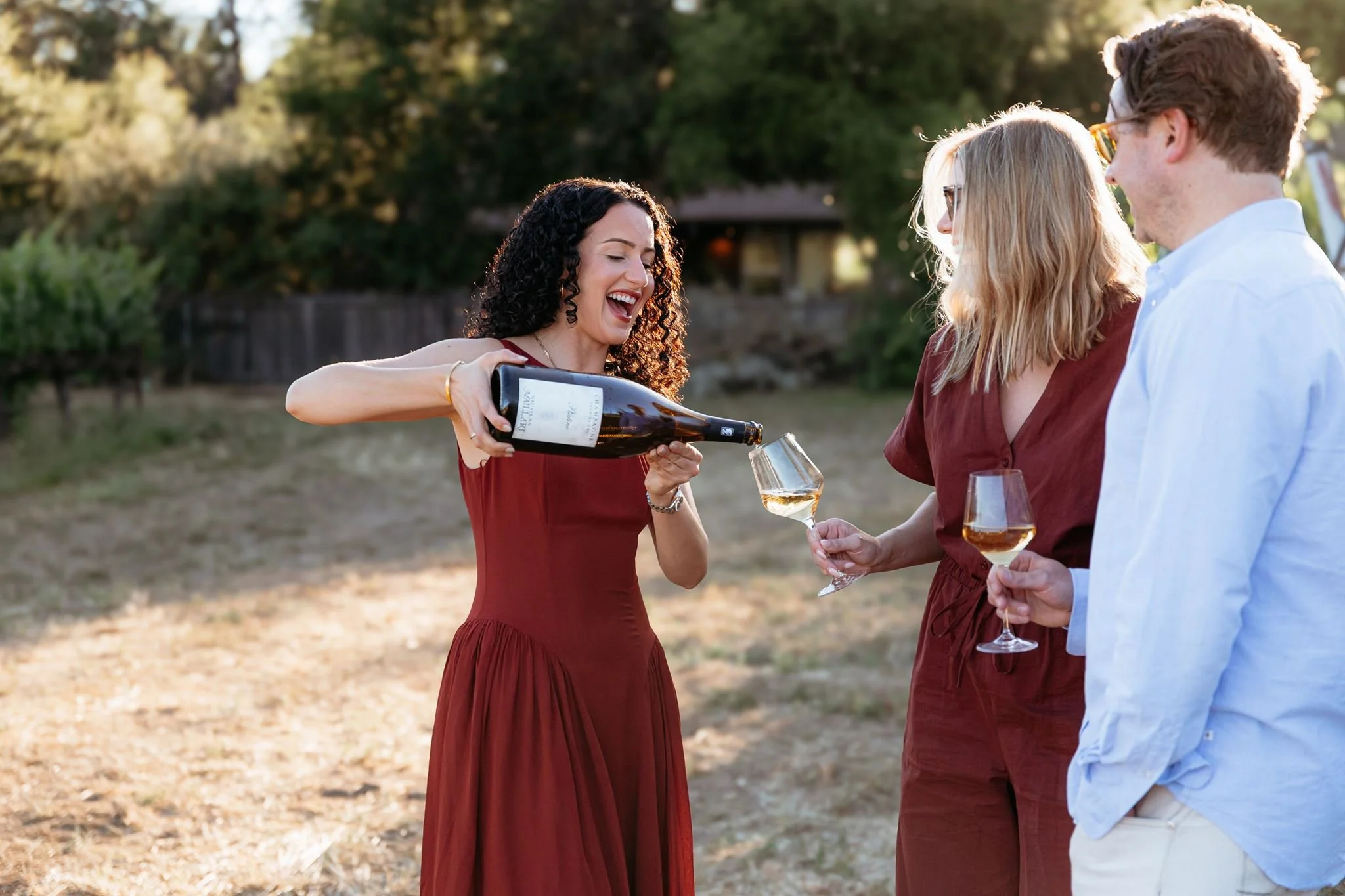
Treat your customers like people
This is the big one for me. The biggest mover I see for DTC is treating your customers like humans. Not a number or a data set. Knowing their names, remembering what they love (their wine preferences, and their life outside of wine too. Big cricket fan? Noted.) And this takes a team, not just one person.
And inviting them back for reasons that have nothing to do with a shipment.
B Cellars in Napa is a great example of what that looks like long term.
They started moving away from traditional wholesale in 2011, and they've been 100 percent direct-to-consumer since 2017. Curtis Strohl of B Cellars broke down their approach on a recent episode of the Business of Drinks podcast, and one thing stuck with me. They hire customer-service-minded salespeople, not tasting room attendants. Shifting that mentality and making every team member feel part of the shared goal of SELLING the wine gives each person their own way of figuring out how to sell and a set of customers that are their direct responsibility, so they can really care for each of them on a personal level.
The Drinks Business dug into this exact shift earlier this month in Why wine brands are putting community before consumption, and I was so glad to be a part of this conversation. My favorite line came from Andrew Sullivan at Donkey & Goat in Berkeley: "Our sales volume is down, but our revenue is up." He credits by-the-glass sales at their own events. Fewer bottles, more value, all because people showed up.
What I said in that piece still stands. Things like female-led, organic, regenerative... they land so much better in person than on a label. When a winemaker is in the room connecting with people, that's when the story goes from something you hear to something you feel.
Four DTC moves that work for small producers
These are the ones I've seen work over and over, at the price points small producers actually need.
Founder-led club events. Nothing sells a wine club like the person who made the wine standing right there. Keep it small, host it yourself, and give guests a story they'll want to retell.
Private club tastings. Some of the best results I've ever seen came from tastings at private clubs. People walked in expecting to discover something and planning to join. Being strategic about getting into the right room does half the work for you.
Brand collaborations. Pair your wine with a lifestyle brand, and you're suddenly in front of a whole new audience that already trusts the host. Our scent-and-wine dinner with True Botanicals, a Mother's Day event with MTHR at Merriam Vineyards, and a Linger experience with Mascarin for the MTHR retreat in Ukiah all put wine in front of people who never would have walked into a tasting room, and now they've experienced the wine and the story firsthand.
Your mailing list. It's the one channel you fully own. Treat it like a relationship, not a discount feed. First access, allocations, stories from the vineyard, & invites to the events above.
None of these are one-and-done or a silver bullet. Each one is a touchpoint, and people usually need a few before they commit to a brand. The goal is that you build a connection so strong that it’s not just a one-off purchase, they become part of your community for the years to come.
Price for every channel
Let me be clear: distribution is a great reach tool, and good distributor partners build brands. They get your wine onto lists and into markets you can't cover yourself. It just works best when the demand is already there. So community and distribution aren't competing strategies. They feed each other.
The insight we give every producer at ORH is that you should make money on every bottle you sell, in each channel. The whole trade is in a tighter market right now (SipSource data from Wine & Spirits Wholesalers of America had distributor volume down 6.7 percent in the three months through September, revenue down 4.2 percent), so everyone is protecting their margin. Know your numbers before you commit to an FOB so that you can sustainably sell into that market for years to come.
Three checks I walk every producer through:
Margin or markup? They sound the same. They're not. Markup is divided by your cost, margin is divided by the selling price. Ask which one is being used, and how things like warehousing and delivery fees factor in.
Model the tier your accounts will actually buy at, not the best one on the sheet.
Compare the shelf price to your own. If your wine ends up on a shelf for more than you charge on your website or in your tasting room, your own price just became the ceiling.
This is exactly what we dig into in our Channel + Pricing Intensive. We model your pricing from FOB to shelf in every channel, so you walk into every conversation knowing your COGS and where you can negotiate and where you can't.
Where Own Rooted Hospitality fits
We help great small wines find their people. For producers, that means building the kind of demand and strategy that funnels to each sales channel, distribution included.
Channel + Pricing Intensive: Two weeks digging into your channel mix, costs, goals and pricing, so you know you not only know your pricing floor, you have a roadmap to your goals.
Market Readiness: This is the offering we provide to building the commercial foundation and the tools needed so that when a buyer asks you are ready to sell. From strategic club plans to sales trainings, to SOPs and DTC strategy.
Brand Growth Partnership: Our signature tier. PR, partnerships and strategy, plus access to the restaurants, hotels, events and lifestyle brands where your future customers already are.
Planning for 2027? We have one Brand Growth Partnership spot left, so let's talk. Email us at hello@ownrootedhospitality.com and we'll set up a discovery call.
Alex Sarovich is an Advanced Sommelier, VinePair's 2023 Sommelier of the Year, a Wine Enthusiast 2026 Rising Star and the founder of Own Rooted Hospitality in Geyserville, Sonoma County.
Frequently asked questions
What drives DTC wine sales in 2026? Community and occasions. NIQ found 72 percent of wine's decline comes from fewer purchase occasions, not fewer drinkers. The producers creating reasons to gather (and come back) are the ones growing.
Is DTC wine still growing? Volume is down, 8.8 percent in the year through September, but revenue is basically flat and wines over $100 actually grew. The data shows that DTC holds value when the relationship is strong.
What's the best DTC strategy for a small winery? Create occasions. Founder-led club events, private club tastings, brand collaborations, and a mailing list you actually take care of.
Should a small winery work with a distributor? Yes, as a reach tool, and the right partner can help build your brand. Just make sure you're COGS are in line on every bottle, and model your wine from FOB to shelf before you commit.
What's the difference between markup and margin in wine? Markup is profit divided by cost. Margin is profit divided by selling price. So a wine bought at $20 FOB and sold at $30 is a 50 percent markup, but only a 33 percent margin.
Sources
Jeff Quackenbush, "Wine glut persists as Napa summit finds new ways to recovery," North Bay Business Journal, Nov. 12, 2026 (O'Neill, SipSource, MarketPour, NIQ and LandIQ figures)
Kathleen Willcox, "Why wine brands are putting community before consumption," The Drinks Business, Nov. 5, 2026
B Cellars Releases Special New Napa Valley Chardonnay from Legendary Grower (B Cellars' DTC history)
Business of Drinks podcast, "The DTC Strategy Behind B Cellars' Double-Digit Growth With Curtis Strohl"